

Beginner Climbers: Learn to move efficiently, focus on footwork, balance, and learning body position
Intermediate Climbers: Learn to control your body. Flagging, drop knees, heel hooks, toe hooks, and hip rotation will be key!
Advanced Climbers: Learn to create and control force. Learning body tension, compression, stemming, and climbing dynamically will be necessary at this level
Becoming a Complete Climber: Learn to put all these things together and link different techniques together, become comfortable climbing on all different terrain and in different styles
Welcome to the thrilling world of climbing! Here at Velocity Climbing Miami, we’re passionate about helping climbers like you develop the skills and confidence to conquer the wall.
This guide will introduce you to some of the most fundamental climbing techniques at each level of climbing that will serve as a foundation throughout your climbing journey. Remember, mastering these techniques takes time and practice, so be patient with yourself and have fun!
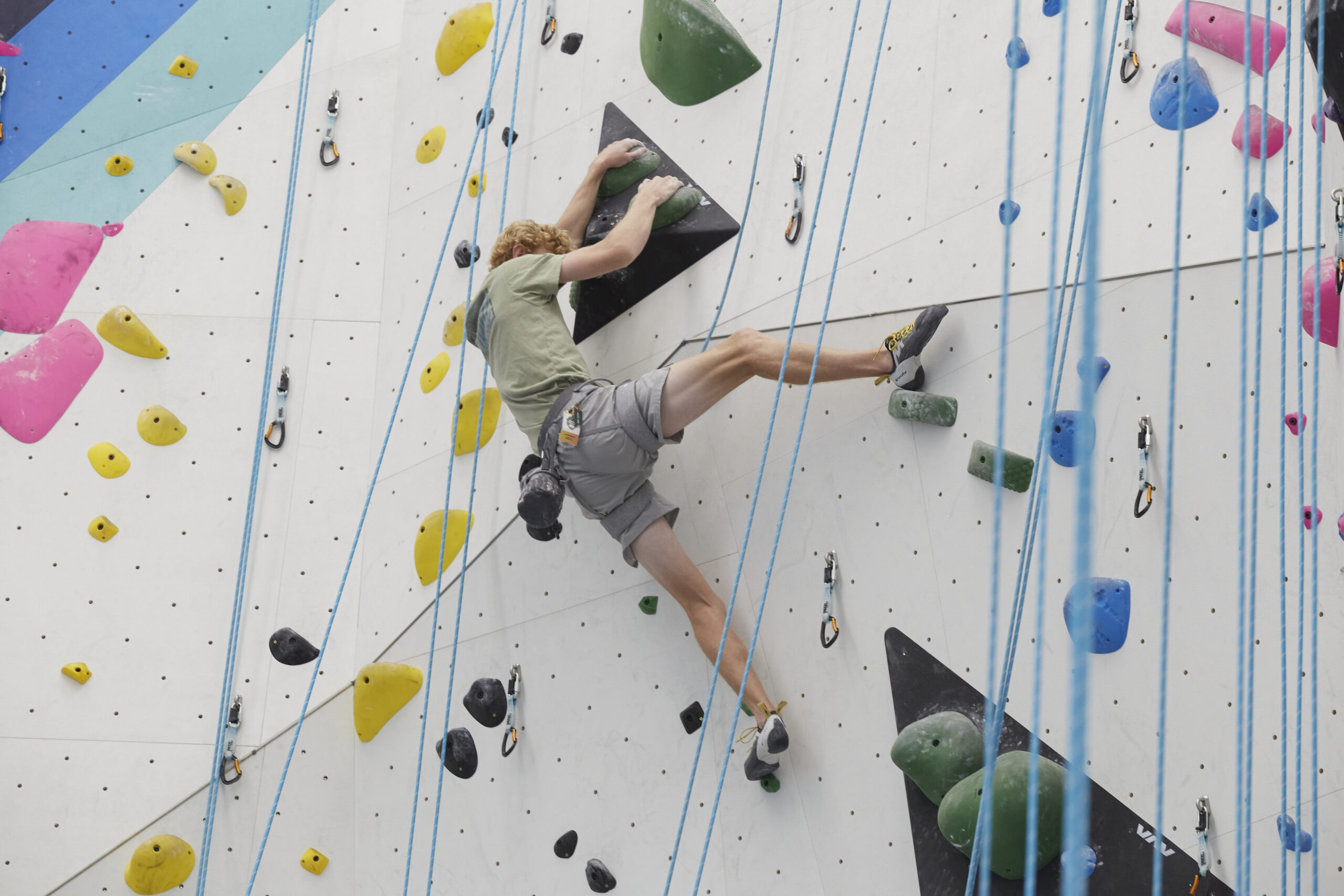
If you’re new to climbing, the most important thing to learn isn’t how to pull harder—it’s how to move efficiently. Beginner techniques focus on the fundamentals that will make every climb easier, including footwork, balance, body position, and using your hands effectively. Mastering these basics will help you conserve energy, move with more confidence, and build a strong foundation for progressing as a climber.
Your feet are your foundation. Instead of trying to pull yourself up with your arms, focus on placing your feet accurately and pushing through your legs. Your legs are much stronger than your arms, so learning to trust your feet will help you climb longer and more efficiently.
Don’t grip every hold as hard as possible. Use only as much grip as you need to stay on the wall. Over-gripping wastes energy and will cause your forearms to fatigue much faster.
Try to keep your weight centered over your feet and adjust your feet when you feel off balance. On easier climbs, keeping your hips relatively close to the wall can help you stay stable and use your legs more effectively.
When you’re not actively pulling, let your arms straighten and relax. Move deliberately, breathe, and look for opportunities to let your legs do the work instead of constantly pulling with your arms.
Once you’ve become comfortable with the fundamentals, you can start using your body in more precise and intentional ways. Intermediate techniques like flagging, drop knees, heel hooks, and hip rotation help you control your position on the wall and reach holds that may have seemed out of reach before. At this stage, the goal isn’t simply to climb harder—it’s to understand how changing your body position can make difficult movements more efficient.
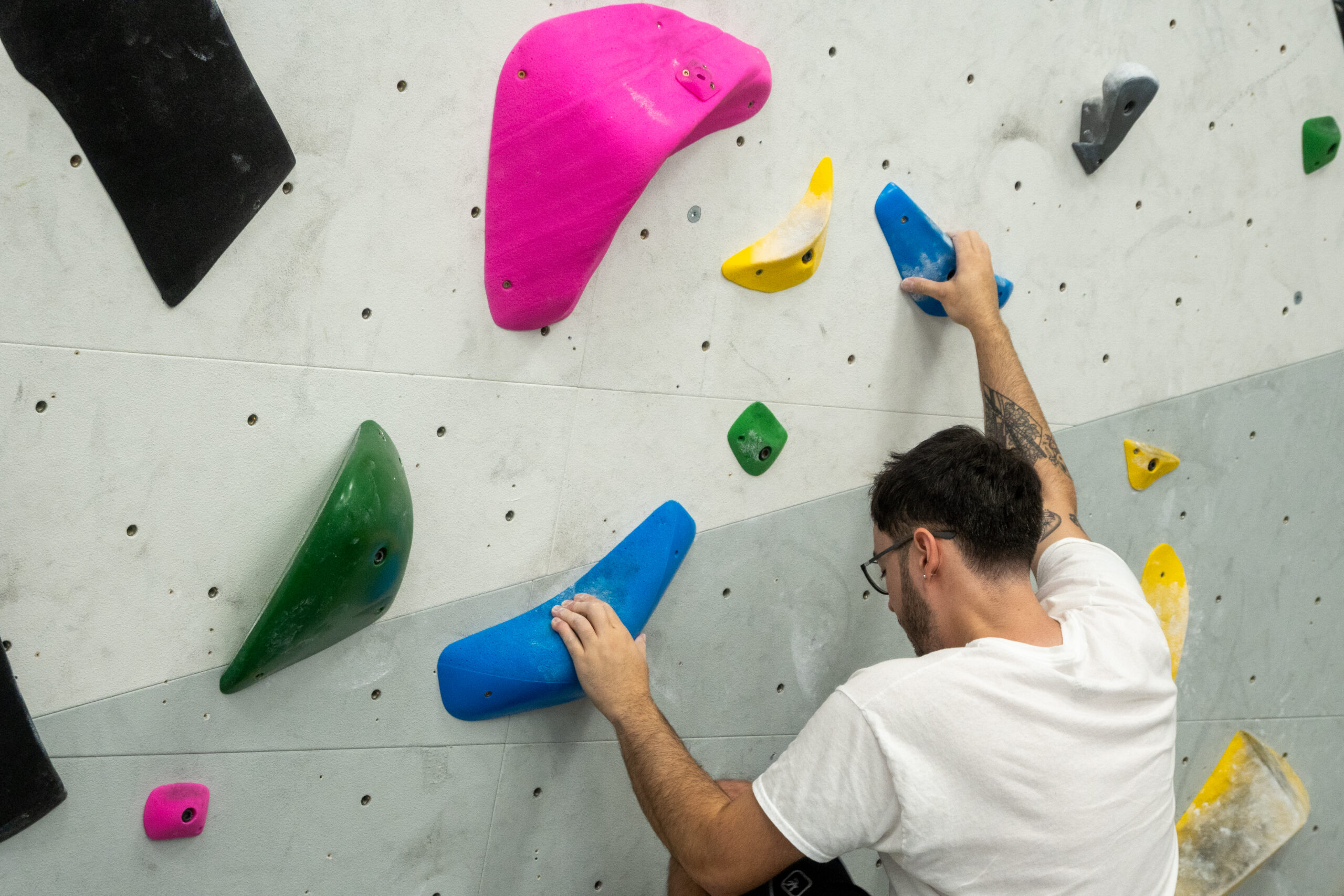
Flagging is a technique where you extend one leg to the side of your body to help maintain balance. By shifting your weight and using your leg as a counterbalance, you can reach farther without having to pull harder with your arms. Flagging is especially useful when the next hold is positioned to one side or when you don’t have a good foothold to use.
A drop knee allows you to rotate your body and lower one knee while keeping your foot on the wall. This changes the position of your hips, often bringing them closer to the wall and giving you additional reach. Drop knees can also help you conserve energy by putting your body in a more stable position instead of relying on your arms.
A heel hook allows you to use your heel as an additional point of contact with the wall. Instead of simply standing on a foothold, you can actively pull with your heel to keep your body in position or bring your hips closer to the wall. Heel hooks are especially useful on steep climbs, around corners, and when you need to reach for a hold while keeping your body from swinging away.
Similar to a heel hook, a toe hook uses your foot to create tension and keep your body connected to the wall. Instead of pulling with your heel, you use the top or side of your foot around a hold or feature. Toe hooks can be particularly useful on steep climbs where keeping your feet on the wall becomes more difficult.
Instead of always facing the wall with both hips square, try rotating your hips to change your body position. Turning sideways can bring your center of gravity closer to the wall and make distant holds easier to reach. Learning when to rotate your hips can help you move more efficiently and avoid using unnecessary upper-body strength.
As you progress, climbing becomes less about simply finding the next hold and more about figuring out how to use each hold. Before starting a climb, look for possible hand and foot sequences, identify where you might need to change positions, and think about how your body will move between holds. Developing the ability to read beta can help you climb more efficiently and avoid wasting attempts.
Good footwork becomes even more important as climbs get harder. Start thinking beyond simply placing your feet on footholds and focus on how you’re using them. Edging, smearing, precise toe placement, foot swaps, and controlled weight shifts can all help you create movement while using less energy.
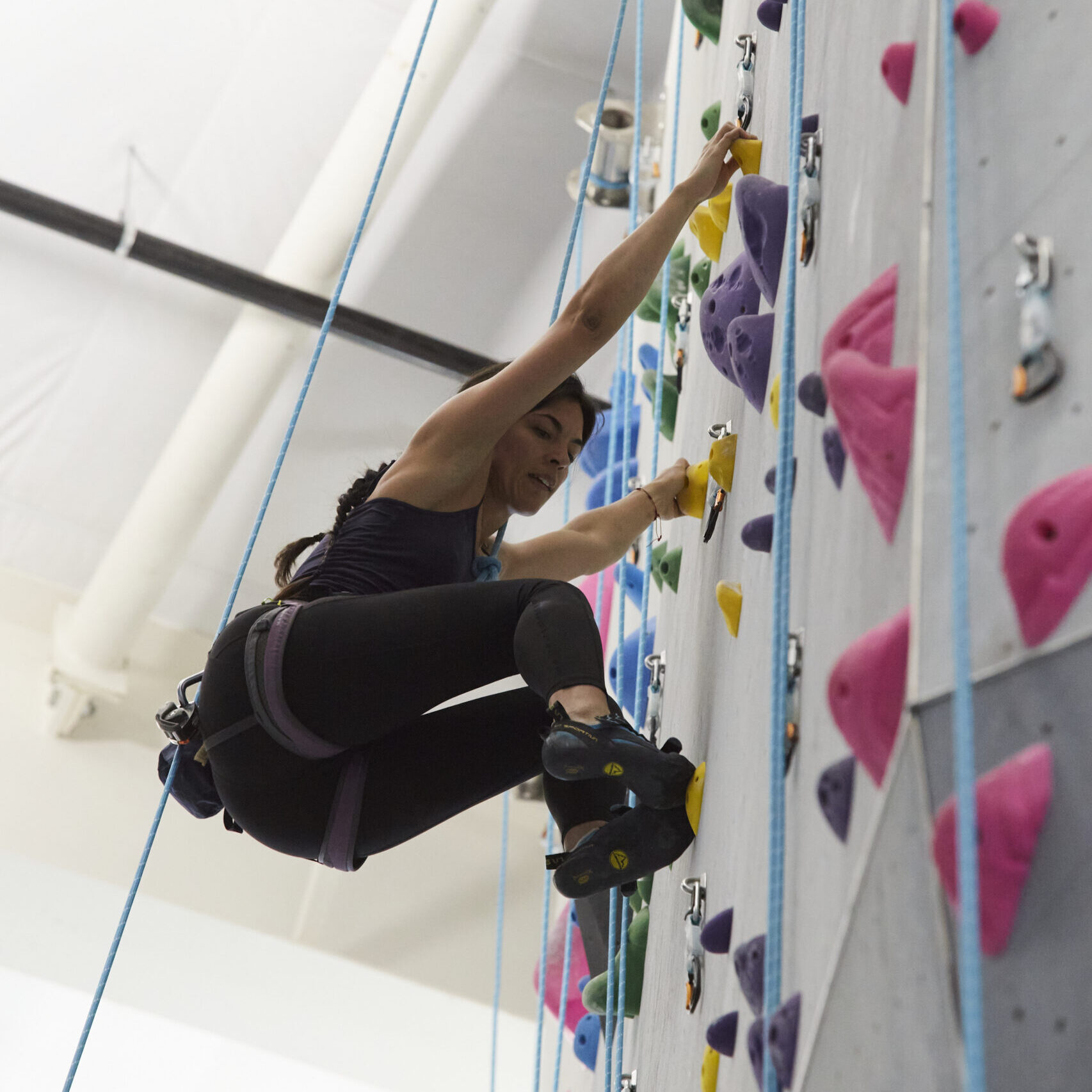
As you progress into advanced climbing, individual techniques start to become pieces of a much bigger movement puzzle. Advanced climbing requires you to combine skills like body tension, dynamic movement, compression, and precise footwork to handle more challenging terrain. At this level, success often comes down to timing, body awareness, and finding the most efficient way to generate and control movement—not simply having more strength.
Body tension is your ability to keep your entire body engaged and connected while climbing, especially on steep or powerful terrain. By creating tension between your hands, feet, and core, you can keep your feet on small holds, control your movement, and prevent unwanted swings. Strong body tension allows you to transfer force more effectively throughout your body instead of relying solely on your arms.
A deadpoint is a controlled dynamic movement where you reach for a hold at the moment your upward momentum is at its peak. Unlike a full dyno, your feet may stay on the wall throughout the movement. Learning to deadpoint allows you to use momentum to reach farther while maintaining more control over your body.
A dyno is a dynamic movement where you generate enough momentum to move between holds, often with your feet leaving the wall. Instead of trying to pull yourself to the next hold, you use your legs and body to generate power before releasing and catching the target. Successful dynos require timing, coordination, and commitment as much as strength.
Compression involves using opposing forces to keep your body in position between holds or features. You might pull with your hands while pushing with your feet, or squeeze between two holds to create stability. Compression is especially useful on volumes, slopers, aretes, and other climbs where traditional pulling techniques aren’t enough.
Stemming is a technique that uses opposing pressure between two surfaces to keep you on the wall. By pushing outward with your feet or using your hands and body against opposing surfaces, you can create a stable position without relying entirely on your grip. Stemming is particularly useful in corners, chimneys, and other climbs with opposing walls or features.
Overhangs require you to combine many of the techniques you’ve learned to keep your body connected to the wall. Maintaining body tension, keeping your hips close, using precise footwork, and incorporating heel hooks, toe hooks, and flags can help prevent your feet from cutting loose. The key is to stay controlled and look for opportunities to use your legs and body position rather than simply pulling harder.
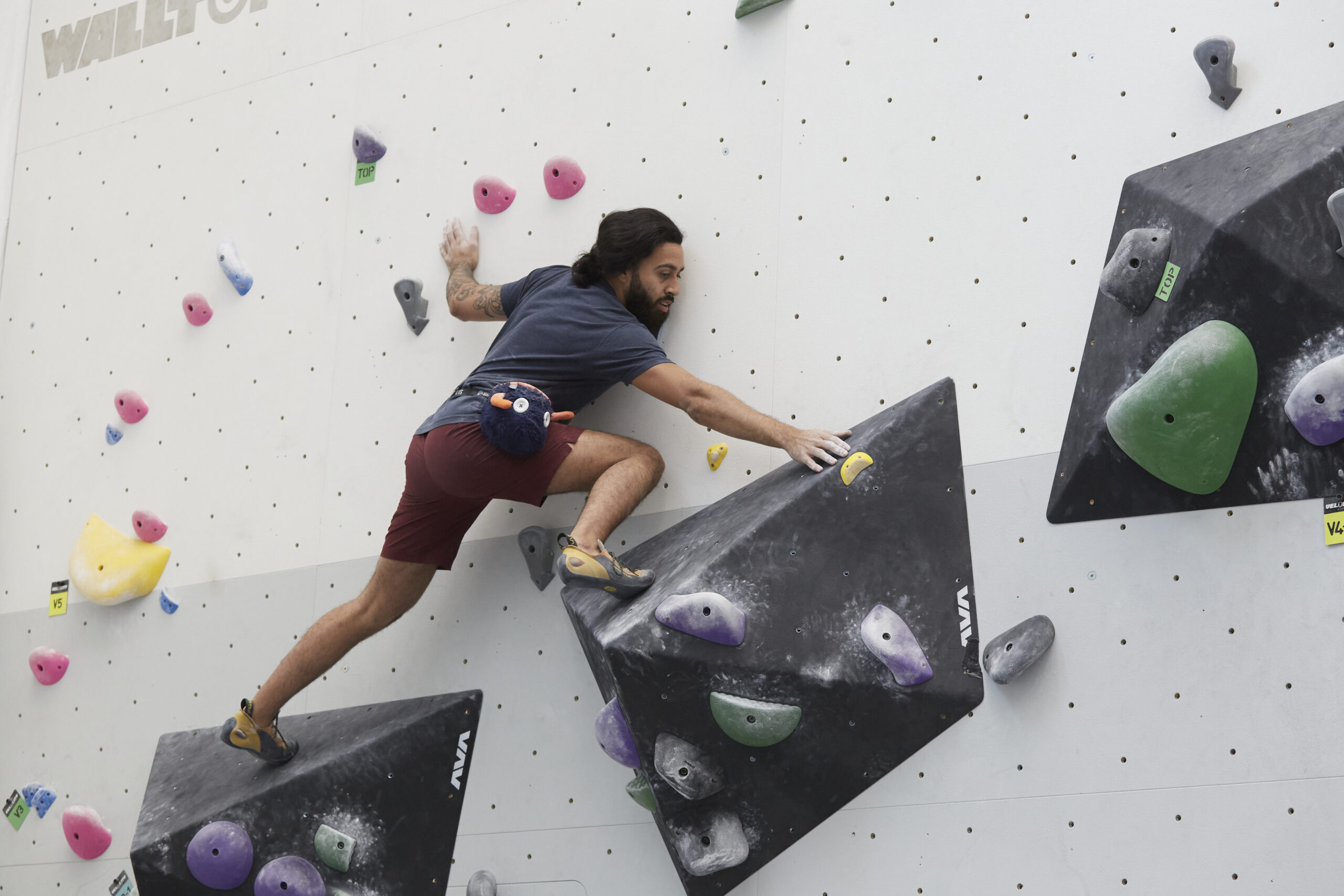
The best climbers don’t think about techniques as isolated skills. Instead, they combine different movements to solve the specific problems a climb presents. A single sequence might require you to flag to maintain balance, rotate your hips to reach a hold, engage your core to keep your feet on the wall, and then use a heel hook to set up the next move.
As you climb harder, start thinking about why you’re using a technique rather than simply trying to remember when to use it. Ask yourself: Where does my weight need to be? How can I make this move easier? What can my feet do to help? The more you understand how your body position affects movement, the easier it becomes to adapt when a climb doesn’t go exactly as planned.
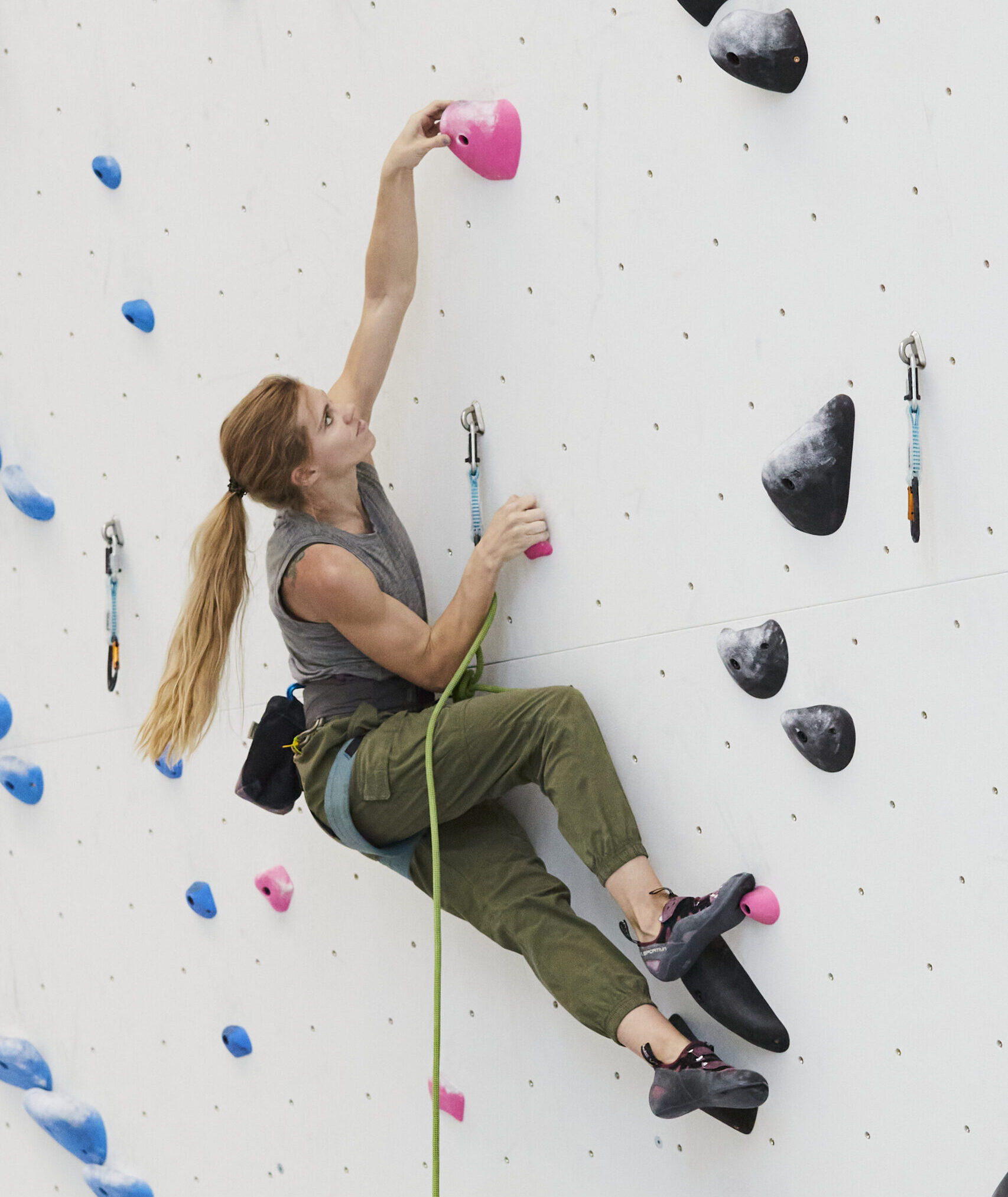
Becoming a better climber isn’t about mastering one technique or simply increasing your strength. A complete climber can adapt their movement to different types of terrain, holds, and problems. They know when to climb slowly and precisely, when to use momentum, when to rely on their feet, and when to commit to a powerful movement.
Progress also means becoming better at reading climbs and solving problems. Before you leave the ground, look at the holds and imagine possible sequences. As you climb, pay attention to what works and what doesn’t, and don’t be afraid to change your beta when you get stuck. Sometimes the solution isn’t getting stronger—it’s finding a better position.
Ultimately, climbing is about putting all of these skills together. Good technique helps you climb efficiently. Experience helps you know when to use it. The more you climb, the more naturally these decisions become, allowing you to focus less on individual techniques and more on solving the climb in front of you.
Velocity Climbing Miami offers climbing classes and clinics designed to teach you proper technique in a supportive environment. Our friendly and experienced instructors will guide you through everything you need to know to get started on your climbing journey.

Come to see us and experience the thrill of climbing at Velocity Climbing Miami!